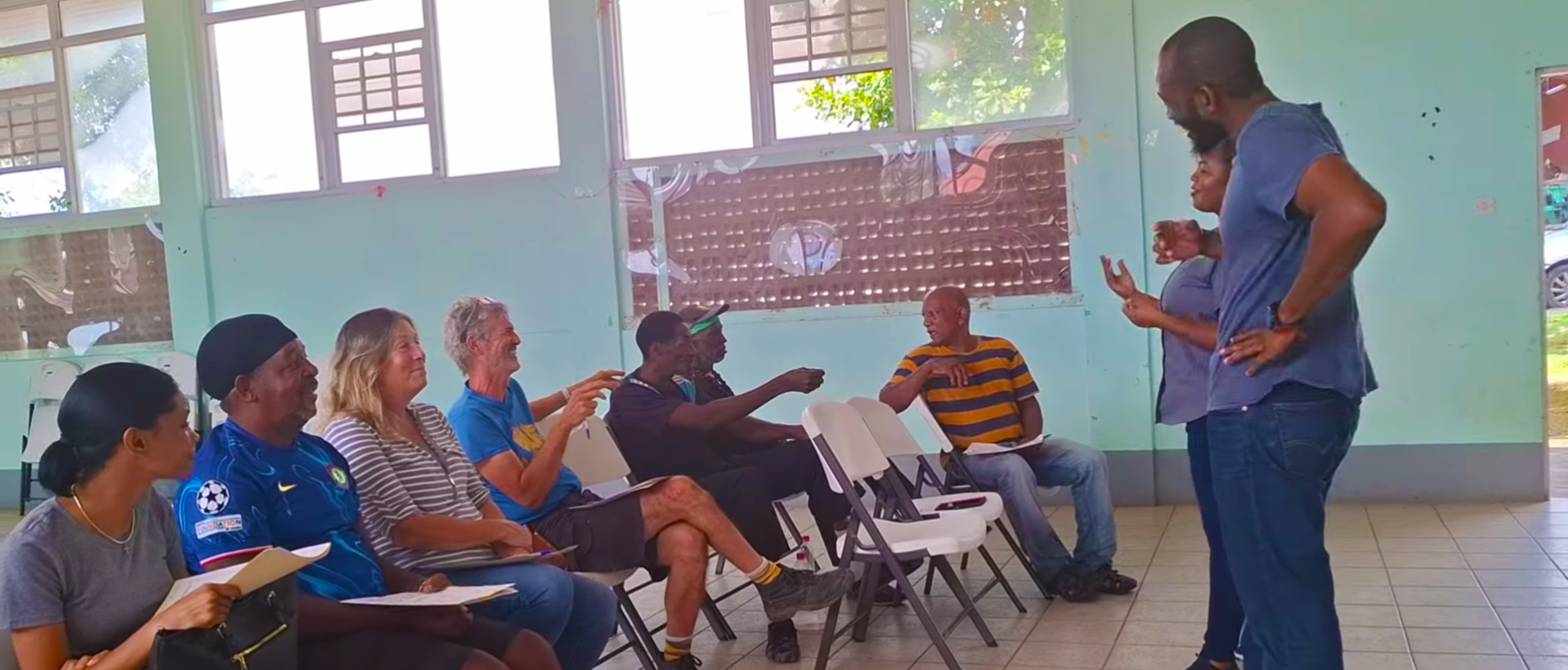
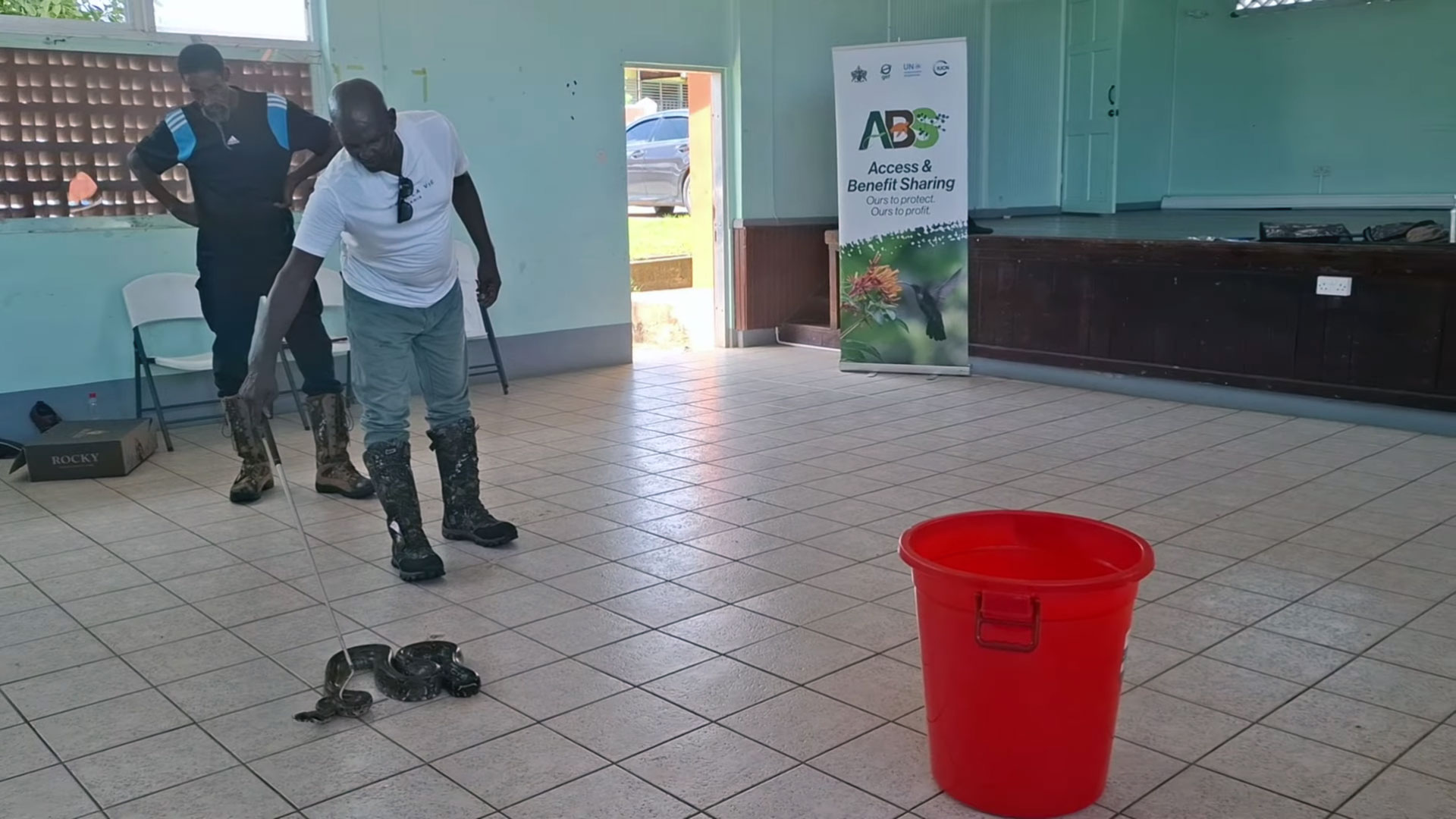
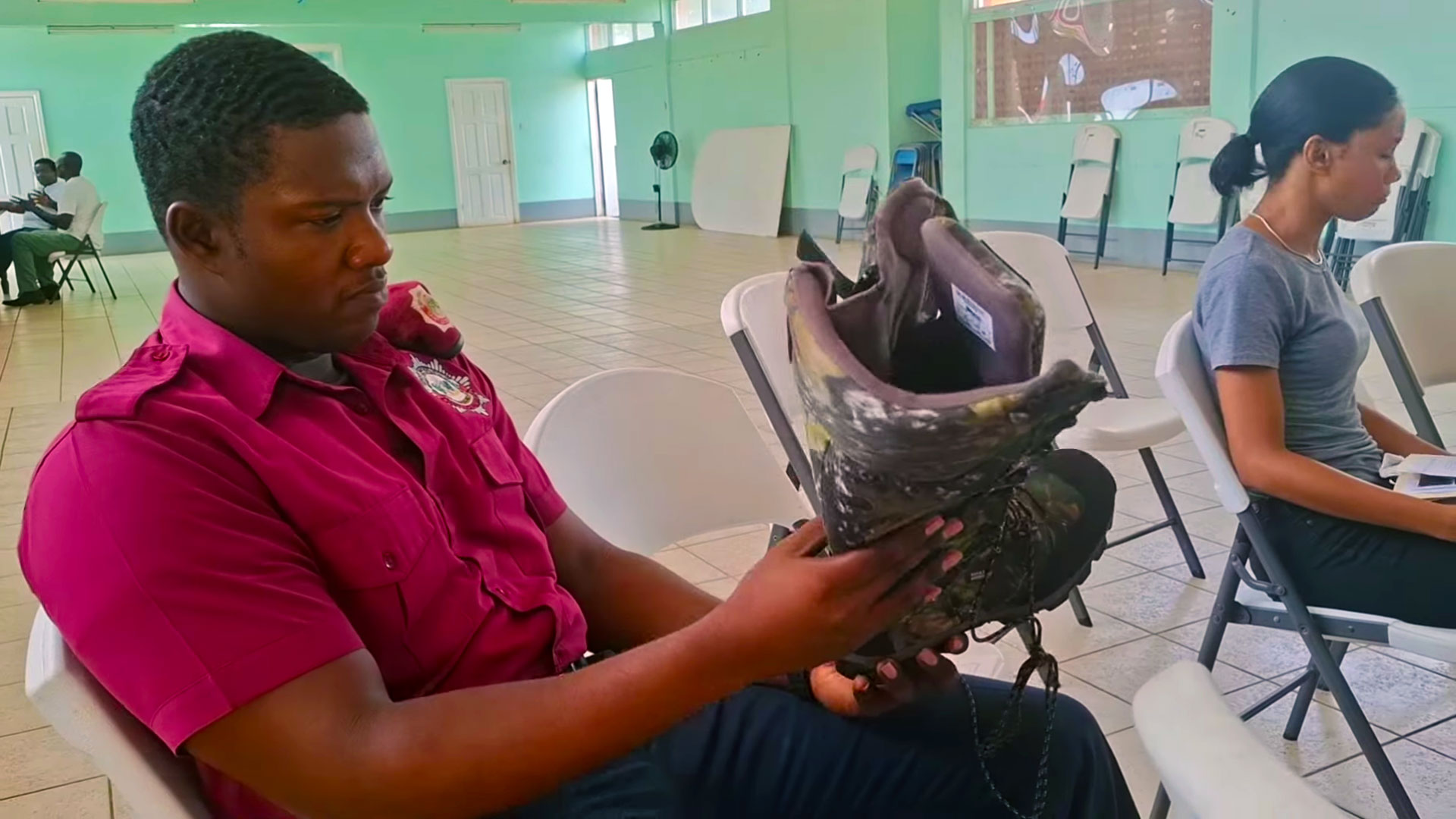
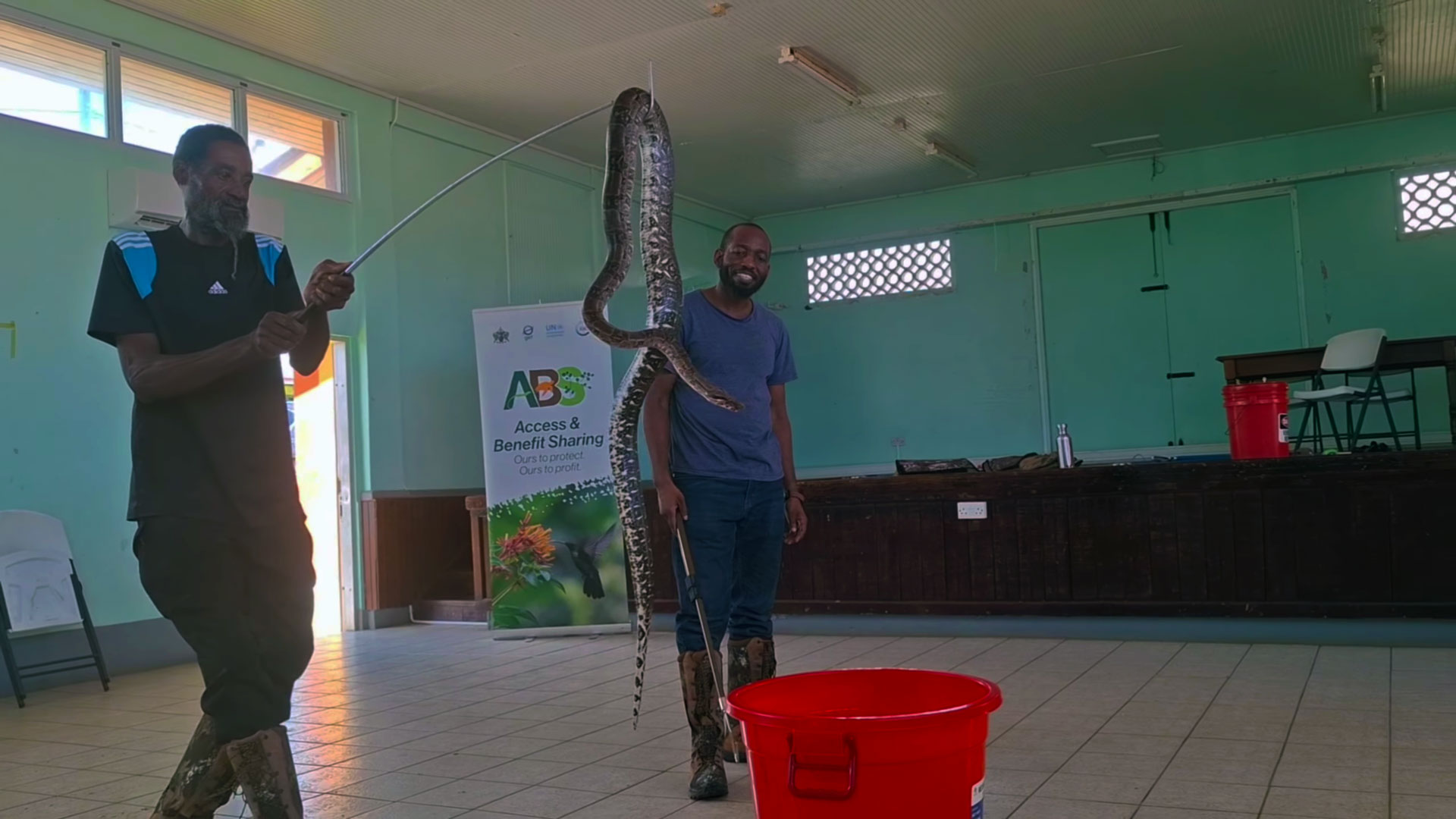
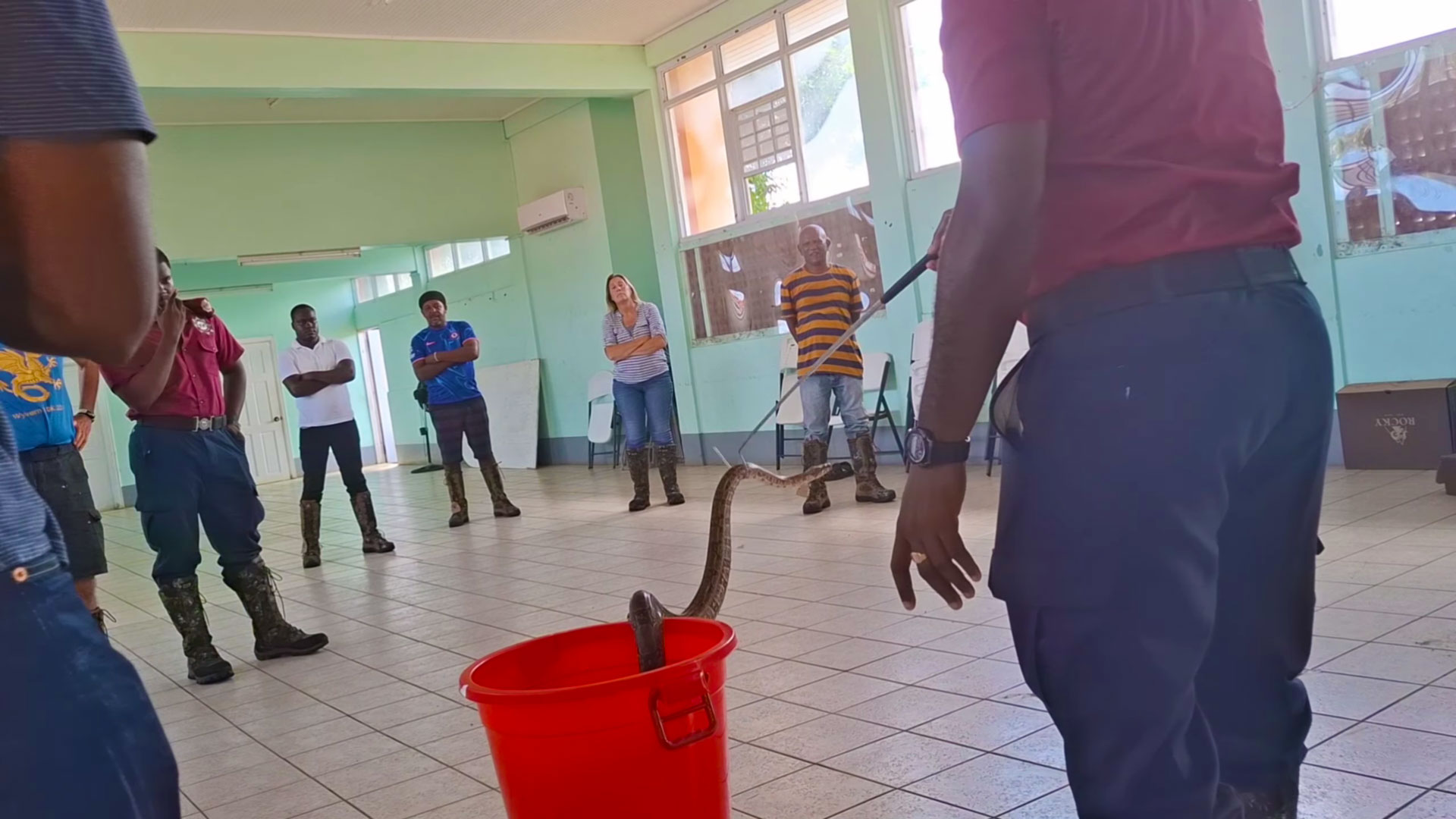
Castries, November 7, 2025. Over seventy residents in Saint Lucia have been successfully trained in the Access and Benefit Sharing (ABS) Project’s* Fer-de-Lance Safe Handling Workshop series. With support from the Department of Sustainable Development and Division of Forestry and Land Resources of the Government of Saint Lucia, the pilot training series targeted communities where species encounters are prevalent, engaging a wide cross section of community stakeholders in live snake sessions, teaching snake behavior, identification and safe handling techniques.
The Saint Lucia fer-de-lance is an endemic pit viper that is widely feared for its potent venom and frequent encounters in rural communities. The workshop series is part of activities to promote human safety and species survival, while laying the groundwork for research on the potential pharmacological benefits of its venom. The workshop participants were allowed to share their snake encounter experiences, as well as opinions on coexistence for Saint Lucia.
Workshop facilitator, herpetologist, Dr. Lenn Isidore and experts from the Forestry Department were able to dispel negative myths and misconceptions about the reptile, “We were able to foster the idea of coexistence by explaining how handling and containing a snake is not as daunting as it sounds and that snakes are not naturally aggressive toward humans and generally prefer to avoid confrontation, striking only in self-defense or when they feel cornered. Another clarification that relieved participants was that, as cold-blooded animals, snakes are not built for prolonged physical exertion like ‘chasing’ and will tire easily.”
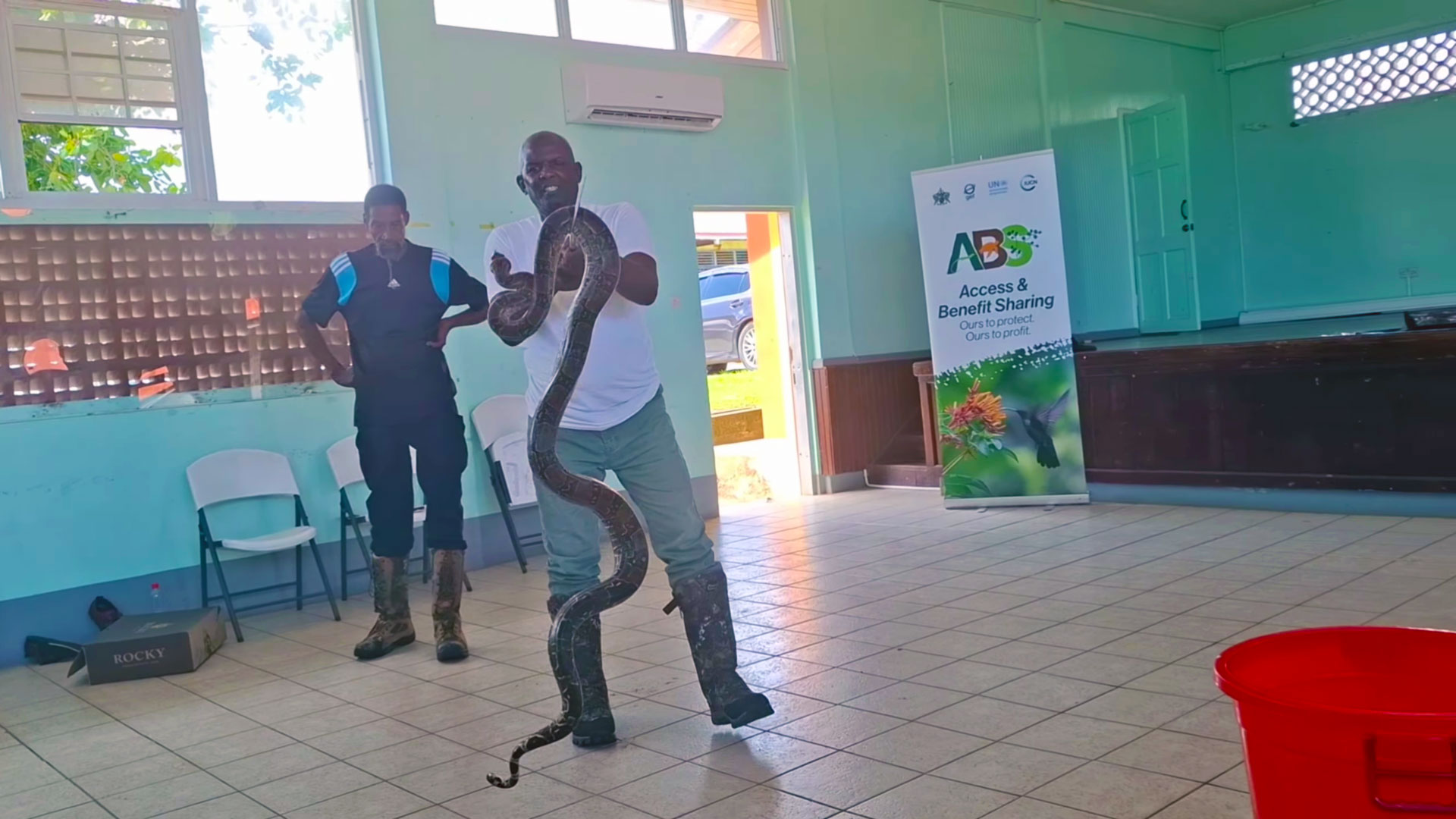
The live handling aspect of the training would begin with a toy snake; participants would take turns using a hook to gently lift the snake midbody and place it in a container. This activity was repeated to handle a boa for comparison, and finally the fer-de-lance under strict expert supervision. Trainees were instructed to contact the Forestry Division to safely relocate any snakes they encounter in their respective communities. The Pilot Fer-De-Lance Safe Handling Workshop series was rolled out in Millet, Anse La Raye, Canaries, Dennery North and South, Micoud North and Praslin communities.
This activity of the ABS Project falls under a seven-month consultancy titled “Updated distribution assessment of the Saint Lucia Fer-de-Lance delivered to inform management approaches by the Forestry Department to facilitate sustainable resource use and enhance public safety”. Other activities under this component include conducting field surveys to map distribution and range; reviewing and validating existing management guidelines for the species; and providing evidence-based recommendations to update the national Fer-de-Lance Management Plan.
National ABS Project Coordinator, Beana Joseph, says, “Fer-de-lance facts, fer-de-lance knowledge for all stakeholders is the starting point to identify its potential genetic resources. This is critical to the ABS framework which determines how these resources are accessed and how the benefits derived from them are shared with the provider communities. We have just concluded this multi-community workshop series and we are optimistic that the word will begin to spread, public misconceptions about this species will be dismantled, and we can go into the communities to complete the other activities of this project component.”