The Food and Agriculture Organization of the United Nations (FAO) has commenced the implementation of the FISH-ADAPT project, the largest investment ever made in Saint Lucia’s fisheries sector. This five-year initiative is designed to strengthen climate resilience, safety, and sustainability across the industry. Starting in July 2025, it aims to directly benefit 5,000 fishers, fish vendors, and fish farmers island wide.
The project is currently at its beginning, with FAO technical teams engaging the Department of Fisheries and sector stakeholders to assess needs and guide interventions.
Enhancing climate resilience through improved vessels and safety equipment
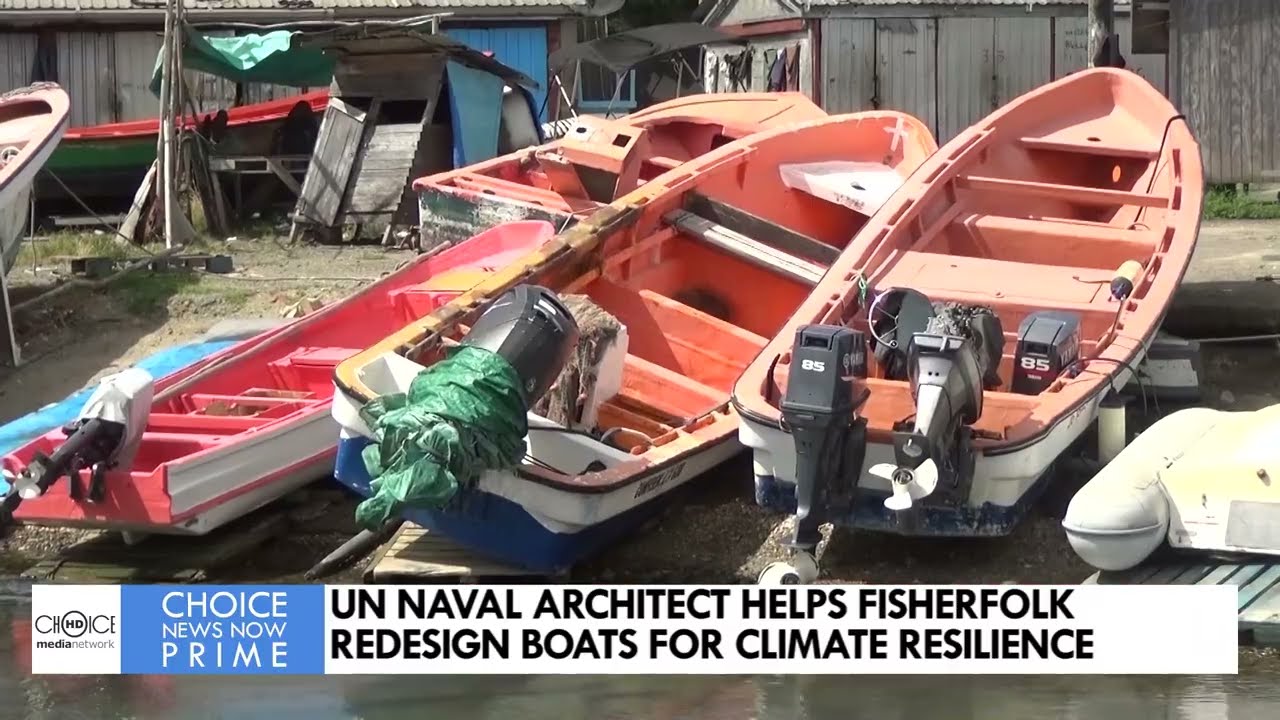
FAO naval architect Derrick Menezes is leading vessel assessments to support fishers in redesigning boats for improved climate resilience, cost-effectiveness, and fuel efficiency. This work will inform the building of safer, more resilient fishing vessels.
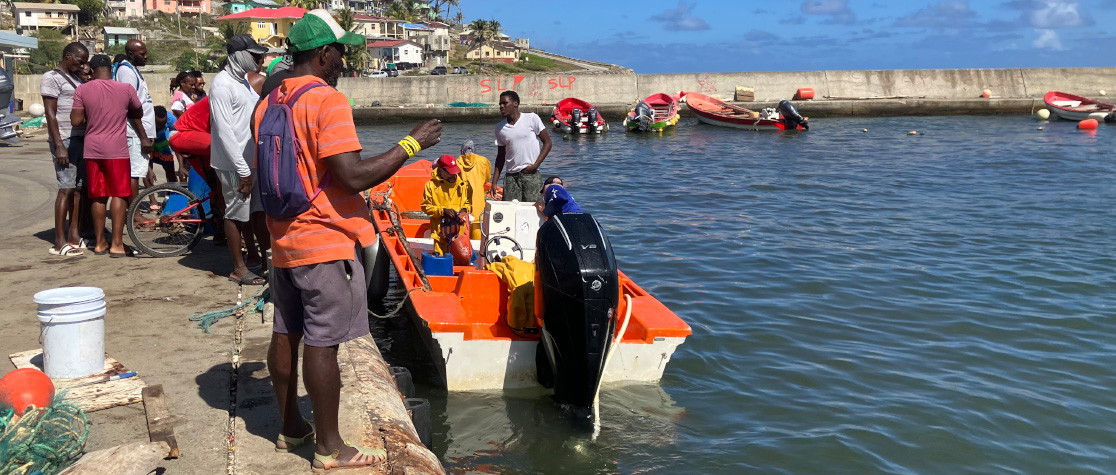
Saint Lucia’s fleet is primarily composed of 25–30 ft pirogues, imported from Martinique, Guadeloupe, and Trinidad and Tobago, and powered by 75–150 HP outboard engines. Fishers routinely undertake trips of 3–8 hours, travelling up to 65 miles offshore, with crews of three to six.
Fishers’ interest is growing in multi-day vessels with diesel inboard engines and winches, though financial constraints continue to limit their ability to invest in such vessels.
Proposed improvements include:
- Larger, 26–30 ft vessels with raised bows
- Self-draining cockpits and higher gunwale heights
- Buoyancy compartments for unsinkability
- Keel strips with stainless-steel shoes
Local hardware suppliers continue to provide essential boatbuilding materials.
FAO’s boatbuilding training will ensure fishing vessels built to recognized standards of construction, better seakeeping performance and high safety standards.
Building skills and opportunities for Youth
The Government of Saint Lucia, through the Ministry of Tourism, Investment, Creative Industries, Culture and Information and the Ministry of Commerce, Manufacturing, Business Development, Cooperatives and Consumer Affairs, is advancing plans to establish accredited training in fiberglass reinforced plastic (FRP) technology at a maritime academy.
FAO’s boatbuilding program—scheduled for later this year—will complement this effort by training local builders in recognized construction standards and safe vessel design.
Findings from landing site visits and meeting with stakeholders consultations
FAO teams visited cooperatives and landing sites in Gros Islet, Castries, Anse la Raye, Choiseul, Laborie, Vieux Fort, and Dennery. Common needs identified include additional Fish Aggregating Devices (FADs) and insurance for financing, and maintenance of jetties built by Japan International Cooperation Agency (JICA).
The Saint Lucia Air and Sea Ports Authority (SLASPA), marine police, fisheries officers, boat builders, and cooperatives—have emphasized the need for enhanced vessel safety, licensing for boat operators, stronger linkages with tourism, and more proactive fisheries management.
Strengthening safety
FAO fishing safety officer Florence Poulain met with the Department of Fisheries, extension officers, cooperative manager and local fishers, where discussions highlighted the need to develop a national safety training and provide essential safety equipment and technologies—including life jackets, fire extinguishers, and fixed VHF radio systems. Young fishers, in particular, were found to require additional safety skills, especially in the use of GPS navigation and radio communication.
A foundation for a safer future
The Fish Adapt project represents a significant step toward a safer, more sustainable, and climate-resilient fisheries sector in Saint Lucia. By modernizing vessels, safety at sea equipment, strengthening training pathways, and supporting co-management practices, FAO and national partners aim to secure the long-term livelihoods of thousands of people who depend on the marine environment.