FAO and Ministry of Agriculture launch Innovative Hydroponic Demonstration Facility to boost Climate-Smart vegetable production in Saint Vincent and the Grenadines
June 24, 2026
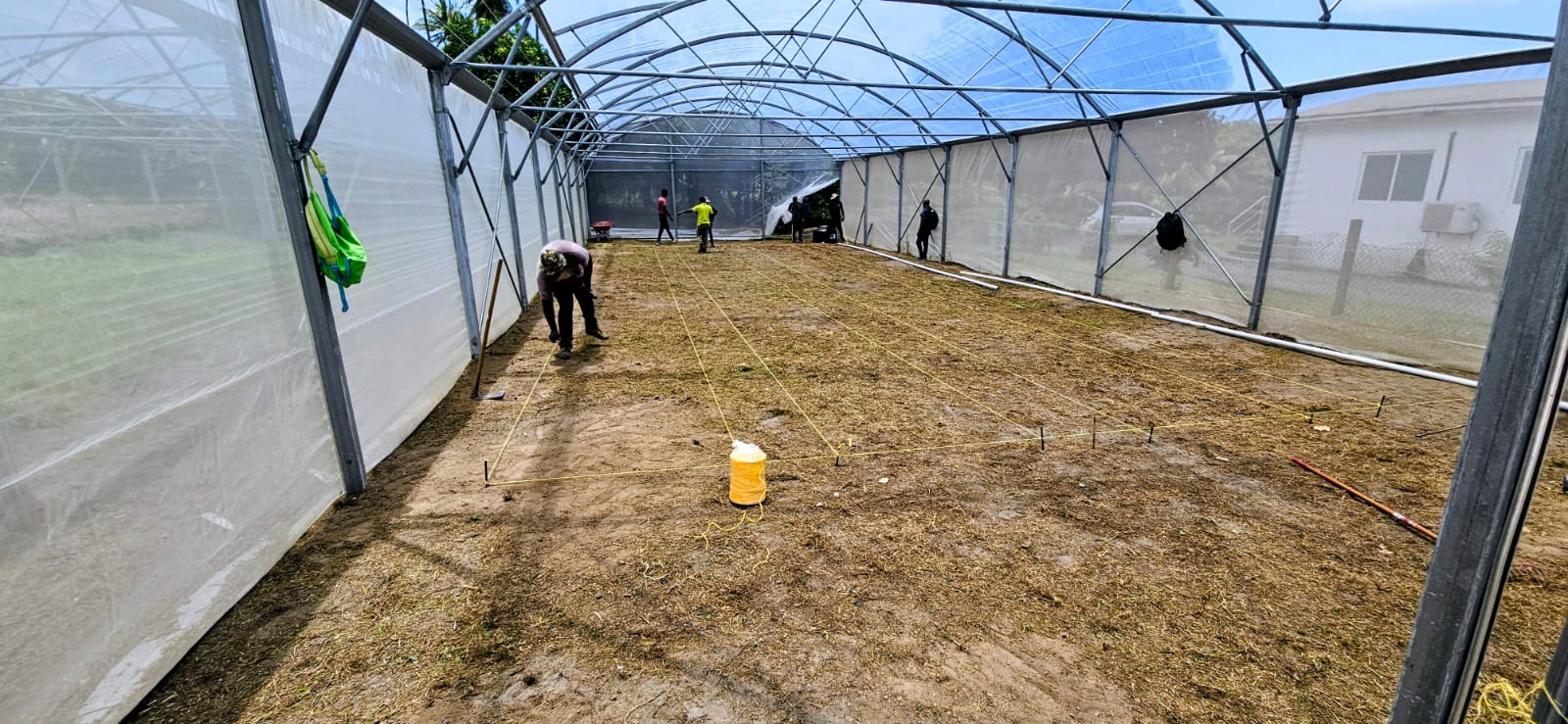
The facility was designed as a dual-purpose learning and demonstration centre
Kingstown, Saint Vincent and the Grenadines – 24 June 2026 – A new chapter in climate-smart agriculture is unfolding in Saint Vincent and the Grenadines with the establishment of an innovative hydroponic demonstration facility designed to boost local leafy green vegetable production, build local technical expertise, and enhance food security. Through a partnership between the Food and Agriculture Organization of the United Nations (FAO) and the Ministry of Agriculture, a Nutrient Film Technique (NFT) hydroponic system has been established at the Orange Hill Agricultural Station on June 9. The initiative forms part of ongoing efforts to strengthen the country’s agricultural sector by promoting practical, sustainable solutions that enhance resilience to the growing impacts of climate change.
NFT hydroponic systems are designed to allow a thin layer of water mixed with nutrients to flow continuously over plant roots, which absorb the water and nutrients they need while also getting plenty of oxygen from the air. By recirculating water and nutrients, NFT systems promote more efficient use of resources, reduce fertilizer wastage, and contribute to sustainable and productive food production. Permanent Secretary Mr. Colville King emphasized that the initiative aligns closely with the Ministry’s commitment to building a more resilient and sustainable agricultural sector. “As we continue to confront the challenges posed by climate change, it is essential that we invest in production systems that make more efficient use of our limited resources while strengthening our capacity to produce food locally. Technologies such as hydroponics provide practical solutions that can help our farmers adapt to changing weather conditions and improve productivity. This partnership with FAO is helping to lay the foundation for a more resilient sector.”
The newly installed hydroponic system, which was constructed using locally available materials, is housed within a 34-foot by 80-foot greenhouse at the Orange Hill Agricultural Station. Procured by the Ministry of Agriculture, the greenhouse was designed to enhance resilience to strong winds while providing a protected environment for fast-growing crops, for example, leafy greens. In addition, the use of solar energy will reduce operating expenses while reinforcing the facility’s commitment to sustainable practices. The NFT system will function as both a training and demonstration facility for protected agriculture and hydroponic vegetable production. Through practical, hands-on learning, it will facilitate the transfer of knowledge and technical skills needed to support the expansion of climate-smart vegetable production throughout the country.
The installation also reflects the project’s broader value chain approach. According to FAO Lead Technical Officer Mr. Juan Cheaz, increasing production is only one part of the equation. “Our objective is not simply to help produce more vegetables, but to ensure that farmers are producing crops that meet market demand. By strengthening production systems, we are helping producers to better position themselves to pursue opportunities in higher-value market segments, including the growing tourism industry.”
The installation was completed during a FAO technical mission conducted from 1–9 June, 2026 under the project, “Building Effective Public-Private Partnerships for Production and Marketing of Sustainable Agricultural Products”.
Speaking on the benefits of the technology, FAO Protected Agriculture Specialist, Mr. Jervis Rowe highlighted the efficiency and adaptability of the system. “NFT hydroponics allows producers to grow more crops in a smaller space while using significantly less water and fertilizer than conventional open-field production. The controlled environment also helps improve crop quality, consistency and yield.”
The outreach activities culminated in a training session held on 9 June 2026 at the Orange Hill Agriculture Station, which focused on nutrient management in hydroponic production systems. The session combined classroom-based instruction with hands-on demonstrations on the preparation and mixing of fertilizer solutions in the appropriate proportions to ensure optimal nutrient availability for crops. Participants gained practical knowledge on how proper nutrient management can improve plant growth and yields while lowering input costs and reducing fertilizer waste.
A total of 57 participants attended the training, including Ministry technicians, farmers, students from the St. Vincent and the Grenadines Community College, and young aspiring agri-entrepreneurs interested in protected agriculture. The session formed part of the project’s broader efforts to strengthen technical capacity and equip stakeholders with the knowledge and skills required to adopt innovative, climate-smart agricultural technologies and production practices.
Looking ahead, Project Coordinator Mr. Jefferson Jaikissoon noted that the demonstration facility represents an important first step in building local capacity for protected agriculture. “This practical training platform will generate valuable lessons on NFT systems made from locally sourced materials. The next phase will see the installation of a second NFT system using imported components, allowing us to compare approaches and identify replicable solutions based on local conditions and resource availability.”
For more information, please contact:
Jefferson Jaikissoon
Agricultural Value Chain Development Specialist
jefferson.jaikissoon@fao.org
Marquita Sugrim
Communications Specialist
Marquitajuanne.sugrim@FAO.org