
Agricultural Ministry Leads By Strengthening Food Systems Through National Dialogue
OCTOBER 27, 2025
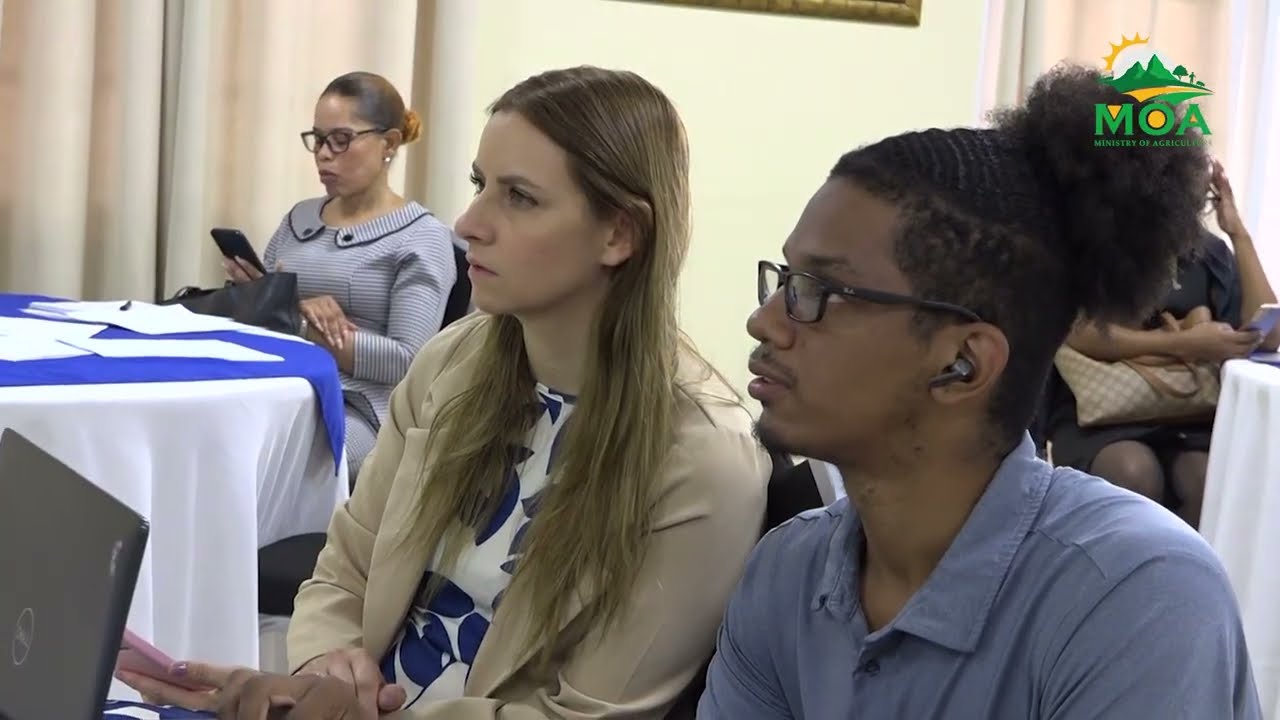
A renewed national drive toward sustainable food production and healthier communities took centre stage as stakeholders from across Saint Lucia united to chart the next phase of the island’s Food Systems Transformation Pathway. The high-level dialogue, held on October 23, 2025, at the Bay Gardens Resort, Rodney Bay, served as a powerful platform to accelerate Saint Lucia’s transition toward a more resilient, inclusive, and nutrition-secure food system.
Hosted by the Ministry of Agriculture, Fisheries, Food Security and Rural Development in collaboration with the United Nations Resident Coordinator’s Office for Barbados and the Eastern Caribbean the dialogue brought together key national stakeholders, farmers, fisherfolk, policymakers, youth, women’s organizations, civil society, and international development partners to validate and advance Saint Lucia’s National Food Systems Transformation Pathway. This initiative aligns with the United Nations Food Systems Summit (UNFSS) framework, which seeks to re-imagine global food systems in support of the Sustainable Development Goals (SDGs) by 2030.
Head of the UN Resident Coordinator’s Office for Barbados and the Eastern Caribbean, Kenroy Roach, underscored the importance of collective regional action and partnerships in transforming food systems for the benefit of all.“So, what we’re trying to do here is promote food systems. And what that basically means is building an ecosystem of actors and actions to ensure that there is food and nutrition security in the region. And so, for us here in the Caribbean, and particularly in the Eastern Caribbean, this means getting all onboard getting the private sector, getting civil society, getting our international development partners on board, partnering with governments to adopt policies and plans and actions, more importantly, to ensure that we can realize the opportunities in our food system.”
The dialogue emphasized multi-sectoral collaboration in addressing key challenges such as climate change, equitable livelihoods, and the growing threat of non-communicable diseases. By promoting innovation, youth participation, and sustainable farming practices, the discussion reaffirmed Saint Lucia’s commitment to building resilient and inclusive food systems.
Deputy Permanent Secretary in the Ministry of Agriculture Fisheries, Food Security and Rural Development, Randal Esnard(Ph.D.), explained that the dialogue serves as a foundation for policies and programs designed to improve livelihoods, reduce poverty, and ensure equitable access to nutritious food.“The whole purpose of this is to really guide the Ministry to develop policies and programs that are geared towards achieving the SDGs, zero hunger, building resilience in the agricultural sector, reducing poverty. So really and truly, this document is kind of like the cornerstone of the national efforts to assist our stakeholders to build resilience and to transform the agricultural sector in a way that is sustainable and in a way that provides for equitable livelihoods and livelihood development,” noted Deputy Permanent Secretary, Esnard.
The dialogue’s breakout sessions focused on four thematic areas, food and nutrition security, equitable livelihoods, climate-smart production and resilience to vulnerabilities and shocks. These discussions generated practical recommendations to enhance agricultural productivity, improve policy alignment, and strengthen inter-agency coordination across sectors such as health, education, and commerce.
Permanent Secretary in the Ministry of Agriculture Fisheries, Food Security and Rural Development, Bradley St. Ange, emphasized that the success of the Transformative Pathway lies in Saint Lucia’s ability to adapt it to national priorities and ensure strong local ownership.“This framework connects our national priorities to the global agenda, but it is our responsibility as Saint Lucians to make it work for us. The success of this pathway depends on national ownership. It must not remain a report on a shelf or a concept driven by external partners. It is our ministry’s mandate and our collective responsibility to bring it to life through our policies, our programs, and our partnerships. As we move forward, the Ministry of Agriculture must lead from the front, coordinating across government and engaging all sectors from health and education to tourism and trade,” explained Permanent Secretary, St. Ange.
The National Dialogue on Food Systems Transformation marks a critical step toward uniting national and regional stakeholders to address Saint Lucia’s food security challenges through a sustainable, inclusive, and resilient approach.